
Among the Sensex firms, Kotak Mahindra Bank, Bajaj Finserv, Bajaj Finance, Adani Ports, Trent, State Bank of India, Titan and Tata Consultancy Services were the laggards. However, Maruti, Infosys, NTPC, Asian Paints, Eternal and Hindustan Unilever were among the biggest gainers.
A figure above 50 indicates that the sector is expanding, while a figure below that level means contraction.

The services sector growth in India rose to a six-month high in January as new business expanded at a faster pace amid buoyant demand from domestic and external clients, a monthly survey said on Monday. The seasonally adjusted HSBC India Services PMI Business Activity Index rose to 61.8 in January, up from 59 in December, pointing to the sharpest rate of expansion in six months.
The RBI left interest rates unchanged, saying there was no substantial development on inflation or fiscal fronts to warrant a fresh reduction.

The rupee breached 90-levels against the greenback for the first time on Wednesday, falling 6 paise to 90.02 in early trade, as banks kept buying US dollars at higher levels and FII outflows continued.

The HSBC India Composite Output Index, which maps both services and manufacturing, increased from 48.9 in March to 49.5 in April, but remained below the crucial 50 mark which indicates contraction for the second successive month.

India's manufacturing sector activity strengthened in October, buoyed by Goods and Services Tax relief, productivity gains and tech investment, even as international sales rose at a weaker pace, a monthly survey said on Monday.

New business orders fall at faster pace, with index at 47.6 in March from 49.5 in February.

A host of macroeconomic data announcements, global trends and trading activity of foreign investors would dictate investors' sentiment in the stock market this week, analysts said. Besides, auto sales data will be closely tracked, experts noted.

The HSBC Emerging Markets Index, a monthly indicator derived from the PMI surveys, inched up to 50.4 in April, from 50.3 in March, signalling only a marginal increase in output across global emerging markets in April.

The HSBC/Markit purchasing managers index for the services industry inched up to 47.1 in October from 44.6 in September, the fourth successive monthly contraction of service sector output across India.

Among Sensex firms, Eternal, Tata Motors, State Bank of India, Adani Ports, NTPC, IndusInd Bank, Bajaj Finance, Asian Paints, Axis Bank and Sun Pharma were the major losers. Bharti Airtel, Tata Steel, Mahindra & Mahindra, Hindustan Unilever, Nestle and Maruti were among the gainers.

The HSBC India Services Business Activity Index, that tracks changes in activity at Indian services companies on a month-by-month basis, fell from 51.6 to exactly 50.0 in October.

Titan, Nestle, Hindustan Unilever, State Bank of India, Larsen & Toubro, ITC, Zomato and Bajaj Finserv were also among the laggards. Adani Ports, IndusInd Bank, Tata Motors and HDFC Bank were among the major gainers.

Meanwhile, outlook for global emerging markets remained relatively weak in September.

Private sector output in India expanded for the first time in 8 months in February as slump in the services sector moderated and manufacturing grew at a stronger pace, an HSBC survey said.

The HSBC/Markit Purchasing Managers Index for the services industry fell to 46.7 in December from 47.2 in November, registering the sixth consecutive monthly drop in output levels, the longest period of continuous reduction since the 2008/2009 global financial crisis.

India's manufacturing sector growth moderated in August as output and sales rose at slowest rates since January, while competitive pressures and inflation concerns hampered business confidence, a monthly survey said on Monday. The seasonally adjusted HSBC India Manufacturing Purchasing Managers' Index (PMI) stood at 57.5 in August, below July's reading of 58.1 but above its long-run average of 54.0, signalling a substantial improvement in operating conditions.

China posted the sharpest increase in output for 15 months, while India saw the steepest expansion since February 2013.

Among the Sensex firms, Larsen & Toubro, Tata Consultancy Services, Infosys, HCL Technologies, Hindustan Unilever, Axis Bank, ICICI Bank and Wipro were the major gainers. Nestle India, Asian Paints, JSW Steel, Kotak Mahindra Bank and HDFC Bank were among the losers.

The index went below the crucial 50 mark.

The HSBC Emerging Markets Index, a monthly indicator derived from Purchasing Managers' Index surveys, inched up to 50.6 in May from 50.4 in April, indicating weak output growth across global emerging markets.

The HSBC/Markit Purchasing Managers Index for the services industry inched up to 47.2 in November from 47.1 in October, the fifth sub-50.0 reading and indicated an output contraction across the Indian service economy.

The survey showed firms' confidence regarding future business grew at the slowest pace in a year last month.

The improvement, coupled with the positive findings of Monday's survey on Indian manufacturing, augurs well for Asia's third-largest economy, which grew at a higher-than-expected 4.8 per cent annual rate in the three months through September.

The HSBC Services Purchasing Managers' Index , compiled by Markit, fell to 50.6 in August from 52.2 in July.

The HSBC Markit Services Purchasing Managers' Index fell to 51.7 in June from May's three-month high of 53.6, in a sign that Asia's third-largest economy is still struggling to climb out of a quagmire of low growth and high inflation.

The index has posted below the 50 mark, which marks contraction, for the third consecutive month.

Services sector slowed down in May on weak economic factors.

The HSBC Emerging Markets Index, a monthly indicator derived from the PMI surveys, remained only just above the neutral threshold of 50.0 in September, signalling muted output growth in emerging markets.


Geopolitical developments between India and Pakistan, quarterly earnings and macro data will be the key drivers of stock markets in the holiday-shortened week, say analysts.
.jpg)
Although the survey pointed to the softness in demand leveling off, a complete recovery is still some way off.

The HSBC Services Purchasing Managers' Index eased to 53.0 in March from February's eight-month high of 53.9.

Even as concerns grow over the residential real estate market reaching its peak, the outlook for office real estate remains strong, with listed real estate investment trusts (Reits) standing to benefit from sustained demand in the segment.
.jpg)
The HSBC Emerging Markets Index, a monthly indicator derived from the PMI surveys, sank to 50.6 in June from 51.3 in May, signalling the weakest increase in output since May, 2009.

The HSBC India Manufacturing Purchasing Managers' Index for the manufacturing industry climbed from 49.6 in October to 51.3 in November on the back of a rebound in new orders and output.
.jpg)
The HSBC Emerging Markets Index, a monthly indicator derived from the PMI surveys, continued its upward trajectory in November on the back of faster manufacturing growth.
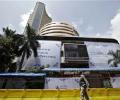
Auto and realty shares were among the top Sensex gainers.

India's private sector activity contracted further in August, reflecting faster contractions of both manufacturing and services output, amid decline in new orders and tough economic conditions.
 © 2026 Rediff.com - Advertise with us - Disclaimer - Privacy Policy - Sitemap - Feedback - About us - Terms of use - Grievances